Climate Risk Reporting
Our comprehensive climate risk reporting tool offers an extensive range of climate metrics for multiple projections, ensuring a thorough understanding of both current and future climate scenarios at your assets location.

Screen, Assess and Report Climate Change Risks Anywhere Worldwide
Climate Risk Reporting & Sustainability Reporting
Risk screening to asset or portfolio levels to support climate risk reporting and answer sustainability frameworks using an extensive range of climate metrics. Aligned with recommendations such as TCFD, IFRS, CSRD, ESRS, and EU Taxonomy.
Data Sources
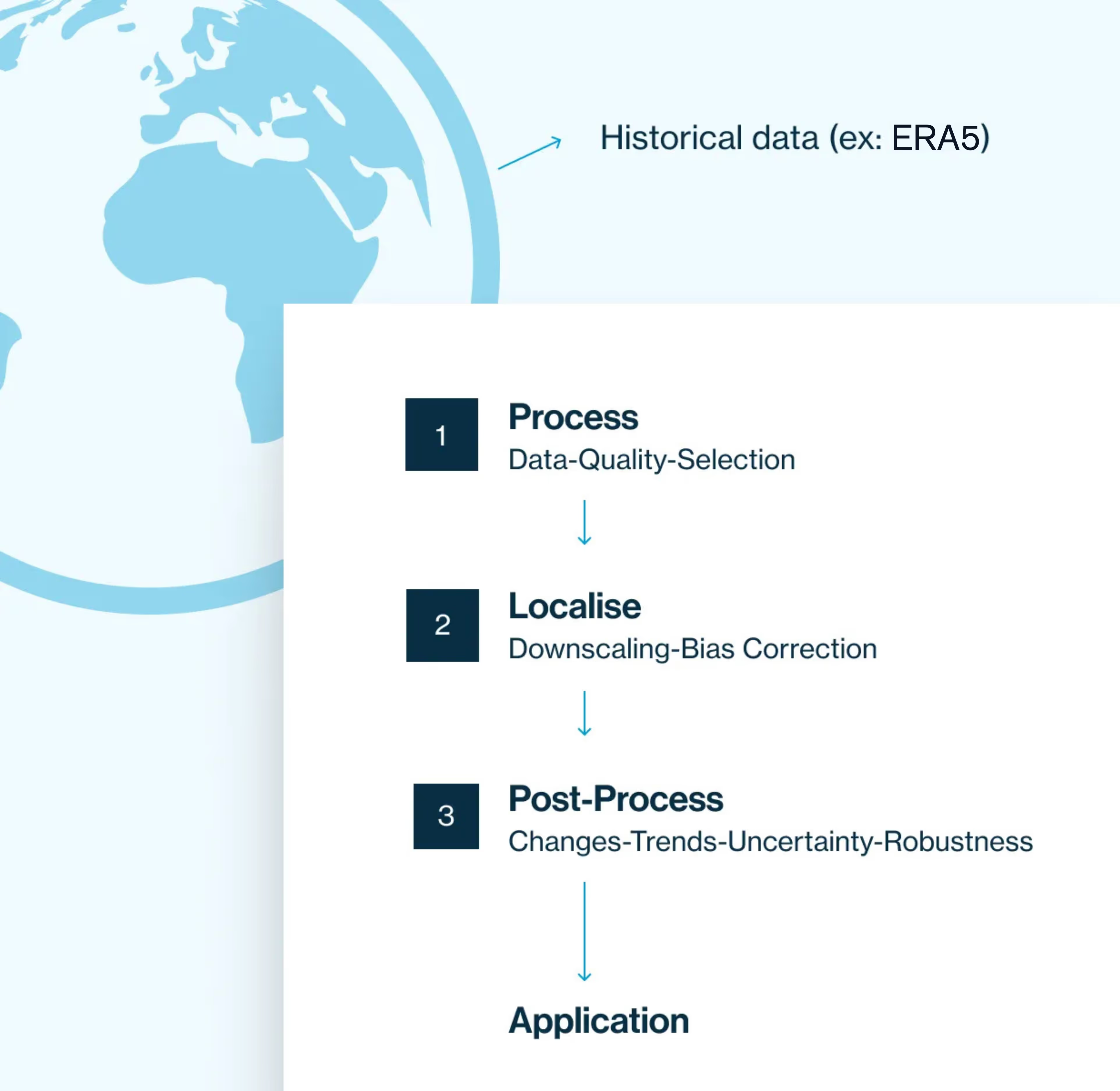
Utilize ERA5 and Vortex as baseline and calibration data in the downscaling of several Global Climate Models (GCMs) to provide accurate future climate projections that support climate risk reporting and decision-making.
+20 Climate Metrics
Analyse both acute and chronic changes in metrics related to temperature, water, wind, solar, and soil categories to support comprehensive climate risk reporting.
Future Projections
Projections are available for short-term (2020-2039), medium-term (2040-2059), and long-term (2080-2099) periods, including SSP emission scenario pathways (SSP1-2.6, SSP2-4.5, SSP3-7.0, SSP5-8.5) and their associated uncertainties critical inputs for robust climate risk reporting.



Frequently Asked Questions About Climate Risk Reporting
It is the process of identifying, assessing and communicating the risks that climate change poses to your assets. ClimateScale's tool offers an extensive range of climate metrics for multiple projections, ensuring a thorough understanding of both current and future climate scenarios at your assets' location.
Yes. You can screen, assess and report climate change risks anywhere worldwide.
Both. Risk screening can be done at asset or portfolio level to support climate risk reporting and answer sustainability frameworks.
It is aligned with recommendations such as TCFD, IFRS, CSRD, ESRS, and the EU Taxonomy.
ERA5 and Vortex are used as baseline and calibration data in the downscaling of several Global Climate Models (GCMs), providing accurate future climate projections that support climate risk reporting and decision-making.
More than 20 climate metrics, allowing you to analyse both acute and chronic changes in metrics related to temperature, water, wind, solar, and soil categories.
Acute risks are extreme, short-lived events, while chronic risks are gradual, long-term shifts in climate conditions. Comprehensive climate risk reporting needs to consider both, and the tool analyses both types of change.
Short-term (2020-2039), medium-term (2040-2059), and long-term (2080-2099) periods.
The SSP emission scenario pathways SSP1-2.6, SSP2-4.5, SSP3-7.0 and SSP5-8.5, together with their associated uncertainties. These are critical inputs for robust climate risk reporting, as they allow you to compare futures with different levels of emissions.
Because climate projections depend on both the emission scenario and the model used. Including the uncertainties associated with each SSP pathway gives a more realistic view of the range of possible risks and supports more robust decisions and disclosures.