Back from Brazil: What ‘Comply-or-Explain’ Looks Like on the Ground
How Brazil's regulatory shift is changing the role of climate physical risk assessments.
Last month Climate Scale took on the adventure of visiting Brazil, exploring the local collaborative relationships, perfectly in time with Brazil changing the mandatory phase of its sustainability reporting regime in favour of a voluntary, comply-or-explain framework. The exchange with our local collaborators and experts helped us answering the following question that we are keen to highlight in this article.
How will this affect the reporting landscape in Brazil and the need for climate physical risk assessments?
At Climate Scale we have been fostering our strong ties to the Brazilian market for years now, experiencing the shifts around the assessment of climate physical risks: from international frameworks such as IFRS, to the national enactment of requirements under Resolution CVM 244 (amending Resolution CVM 193), the framework established to disclose financial information related to sustainability.
On the Ground: Collaboration and Workshops
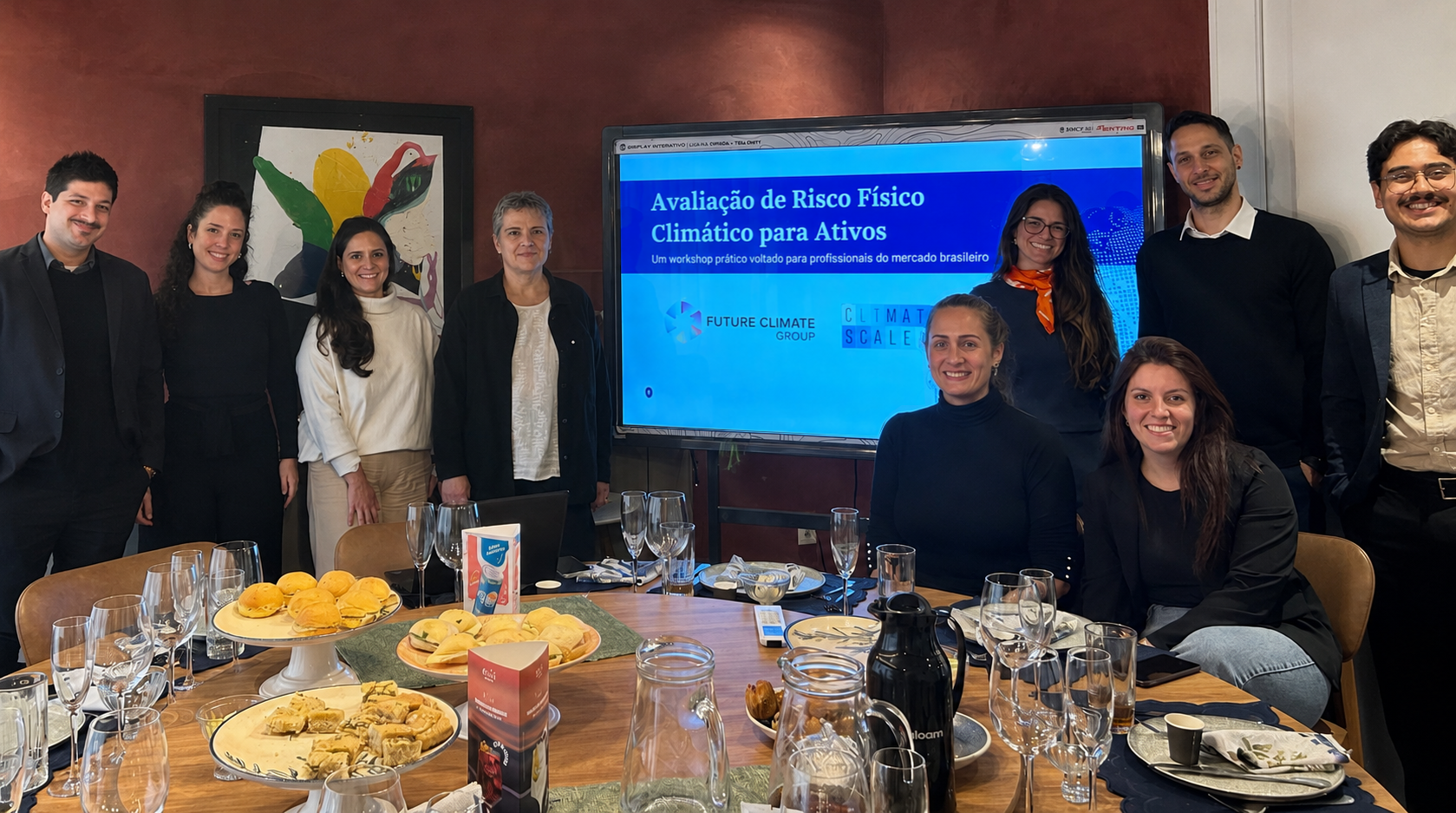
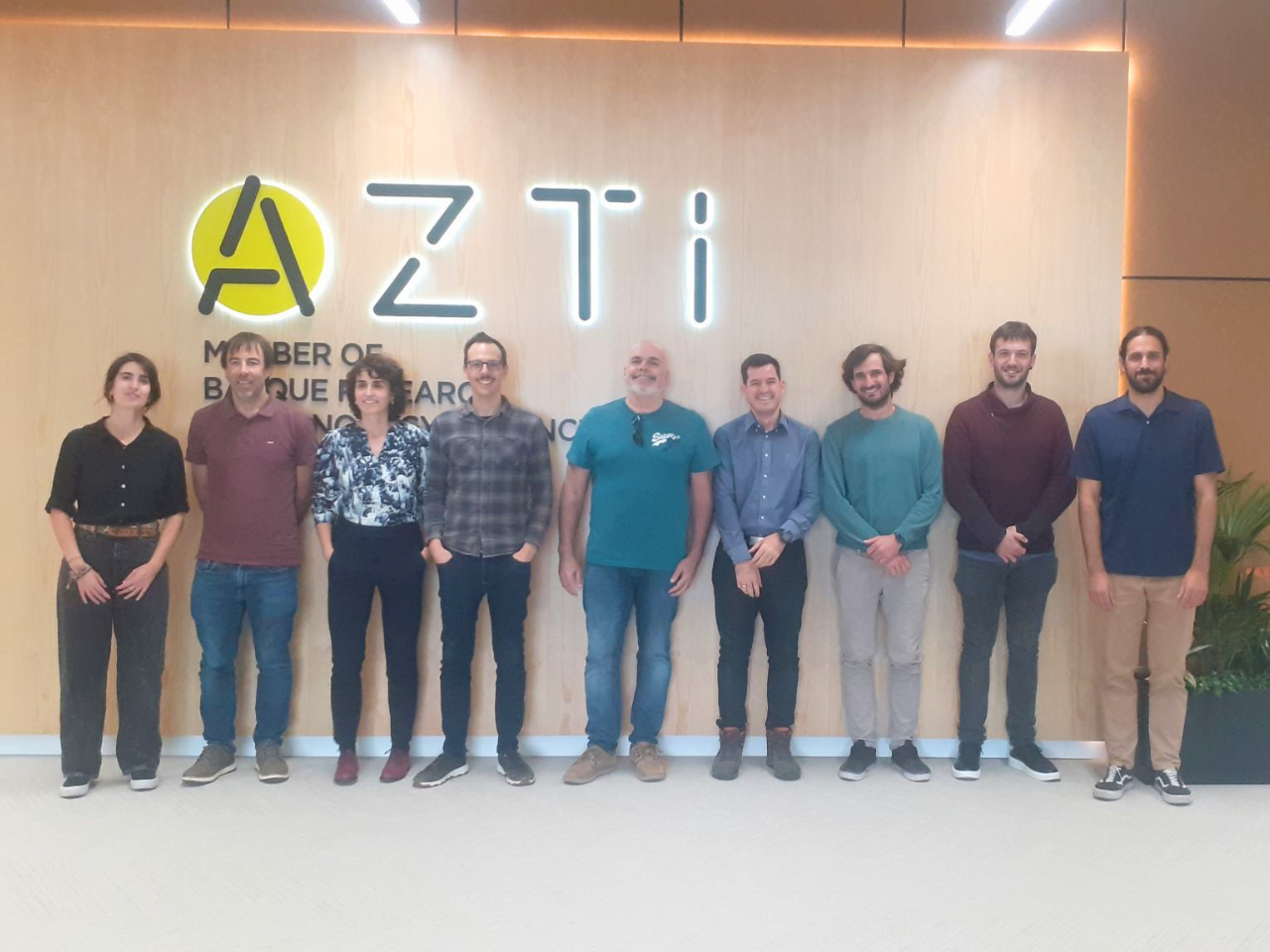
Our visit in Brazil was a highly anticipated field trip due to Climate Scale’s strong ties to the market, having offered our climate physical risk expertise to our Portuguese speaking audience for years now. From Rio de Janeiro, where a good part of the civil society conversation sits, to the country’s economic engine São Paulo, we sat down with our local stakeholders, collaborators, and potential partners to understand how the regulatory shift is landing in practice, and where the real questions lie.
Participating in a workshop co-hosted by one of our trusted local partners Future Climate, we addressed the translation of hazard data into asset-level financial impact, and how to build a physical risk screening for a portfolio of assets. This helped us bring together diverse audiences that brought certain topics regarding the strong regulatory shift and its impact on their climate physical risk assessments to the table. What struck us most during the fruitful exchanges was the realisation that the appetite for physical risk data had not dropped with the mandate, but the reason for asking had significantly changed.
Brazilian assets sit in one of the most exposed operating environments in the world, and none of that climate change exposure disappears just because a reporting obligation changed.-
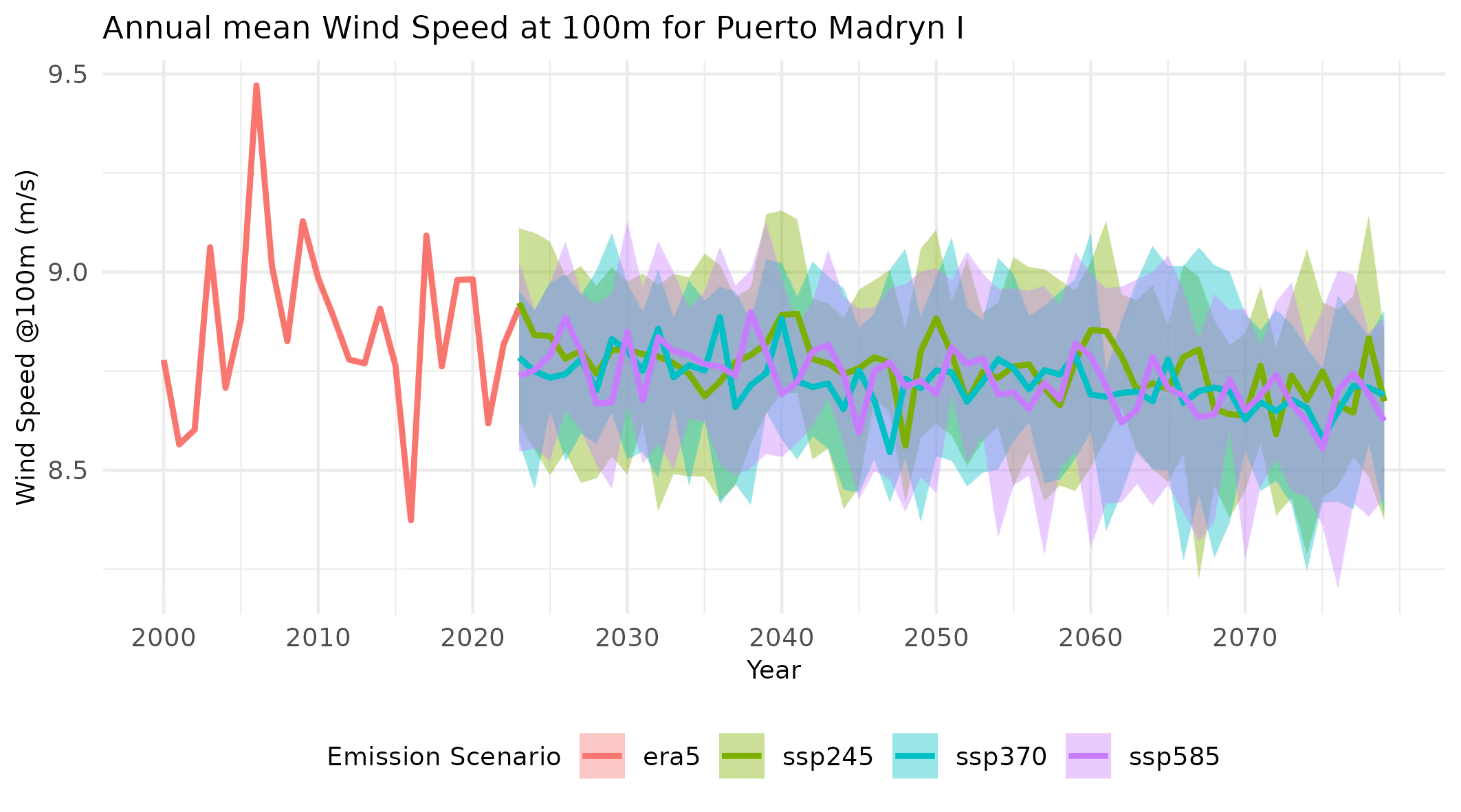
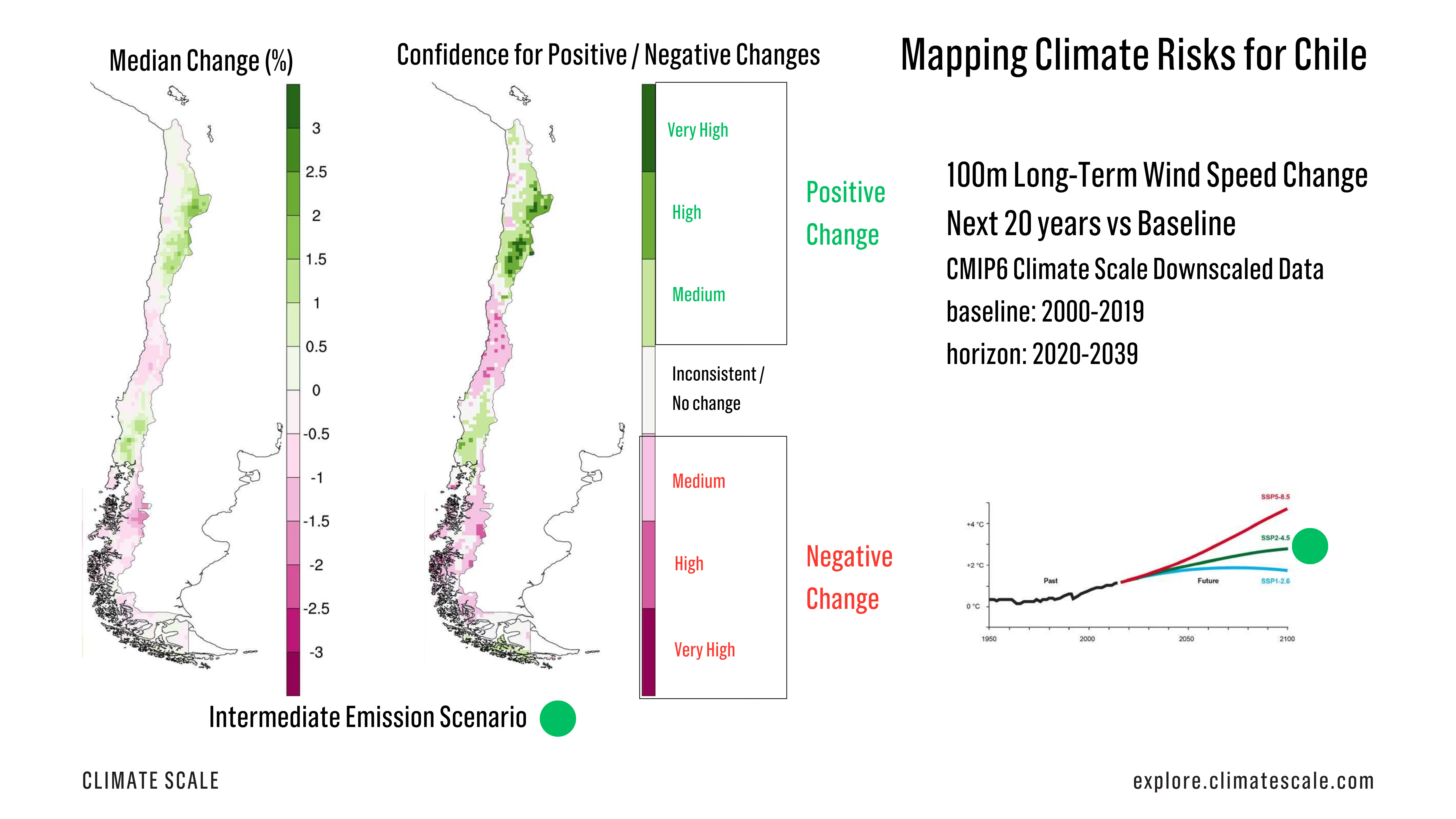
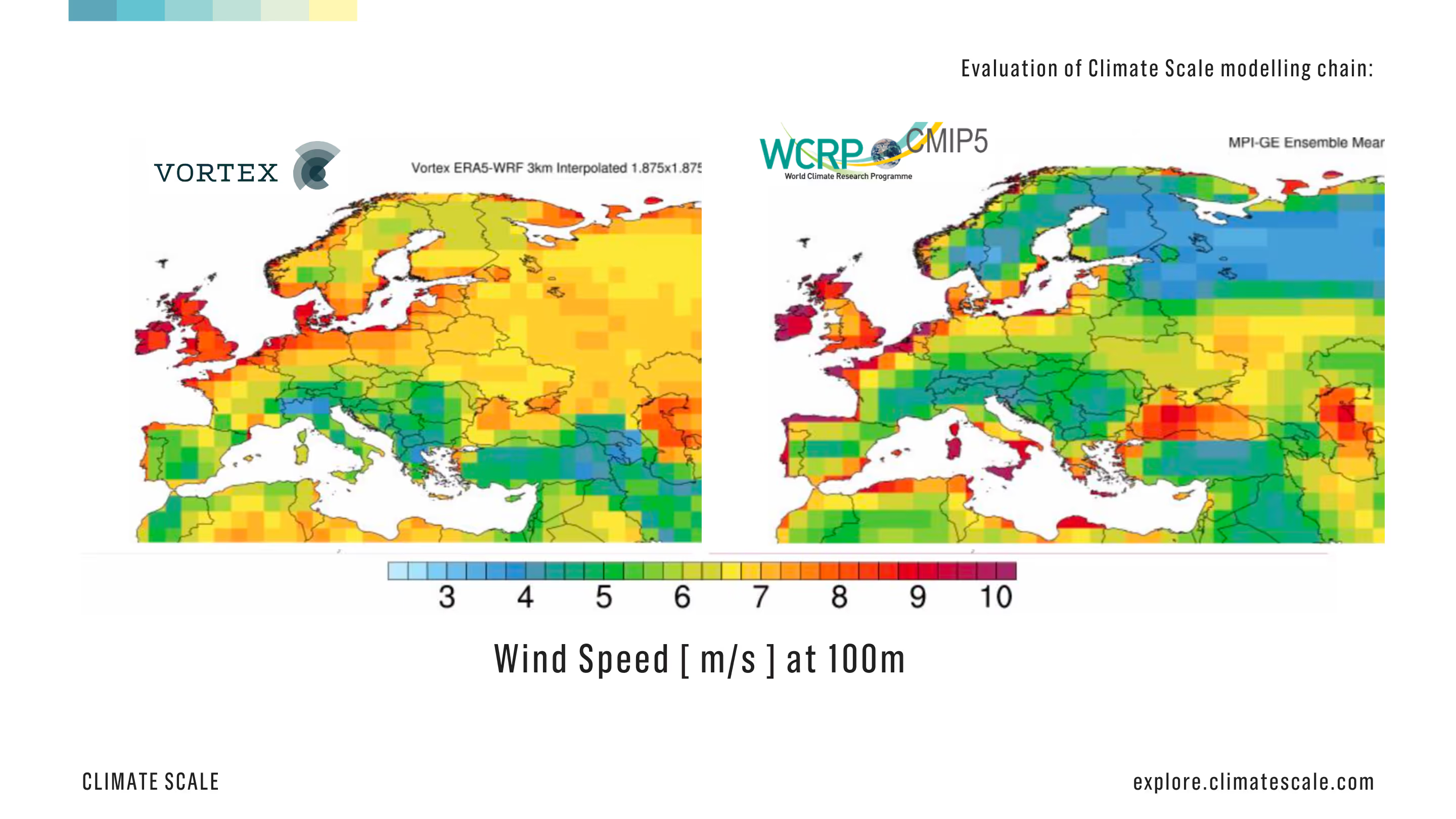
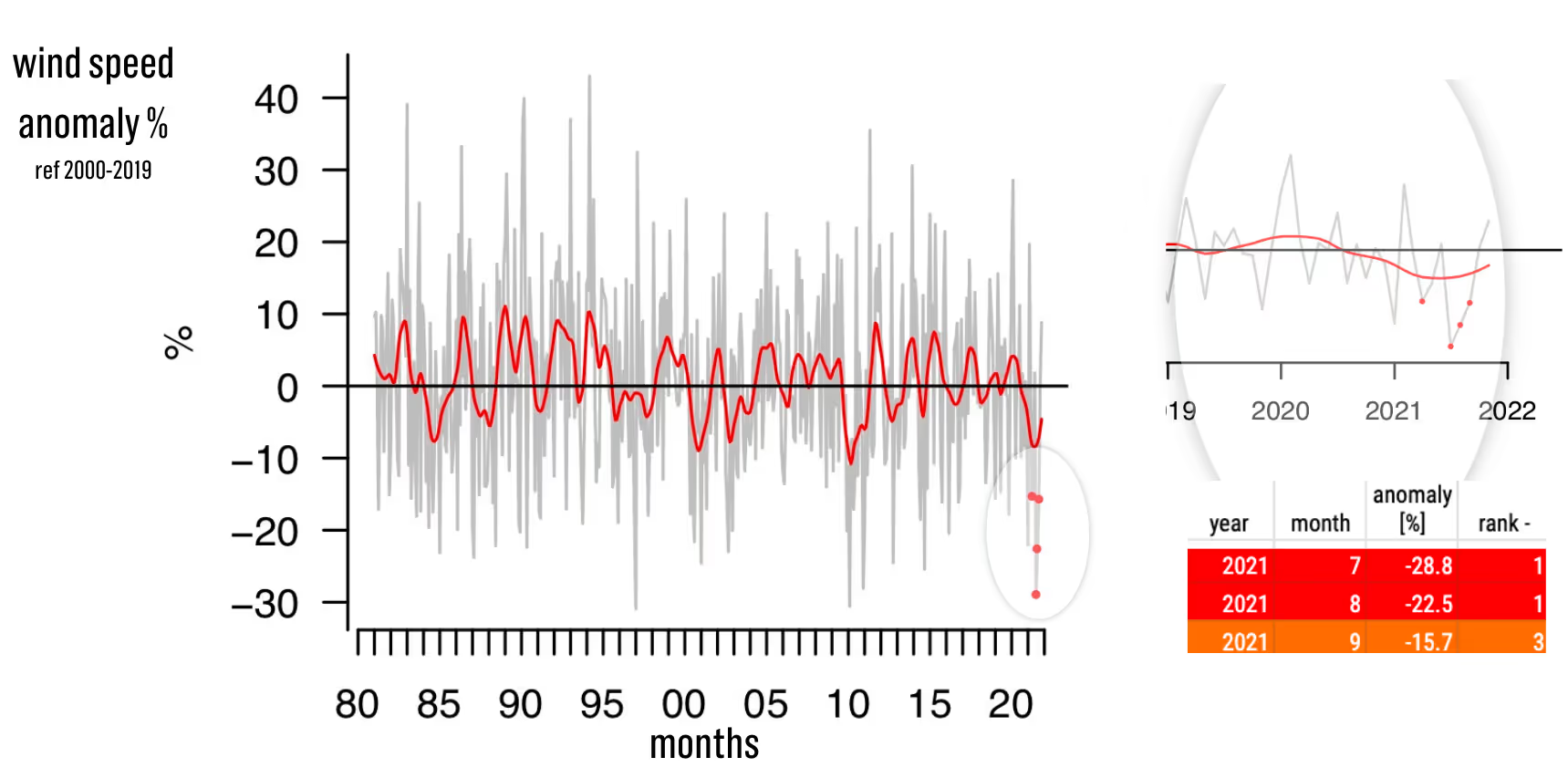
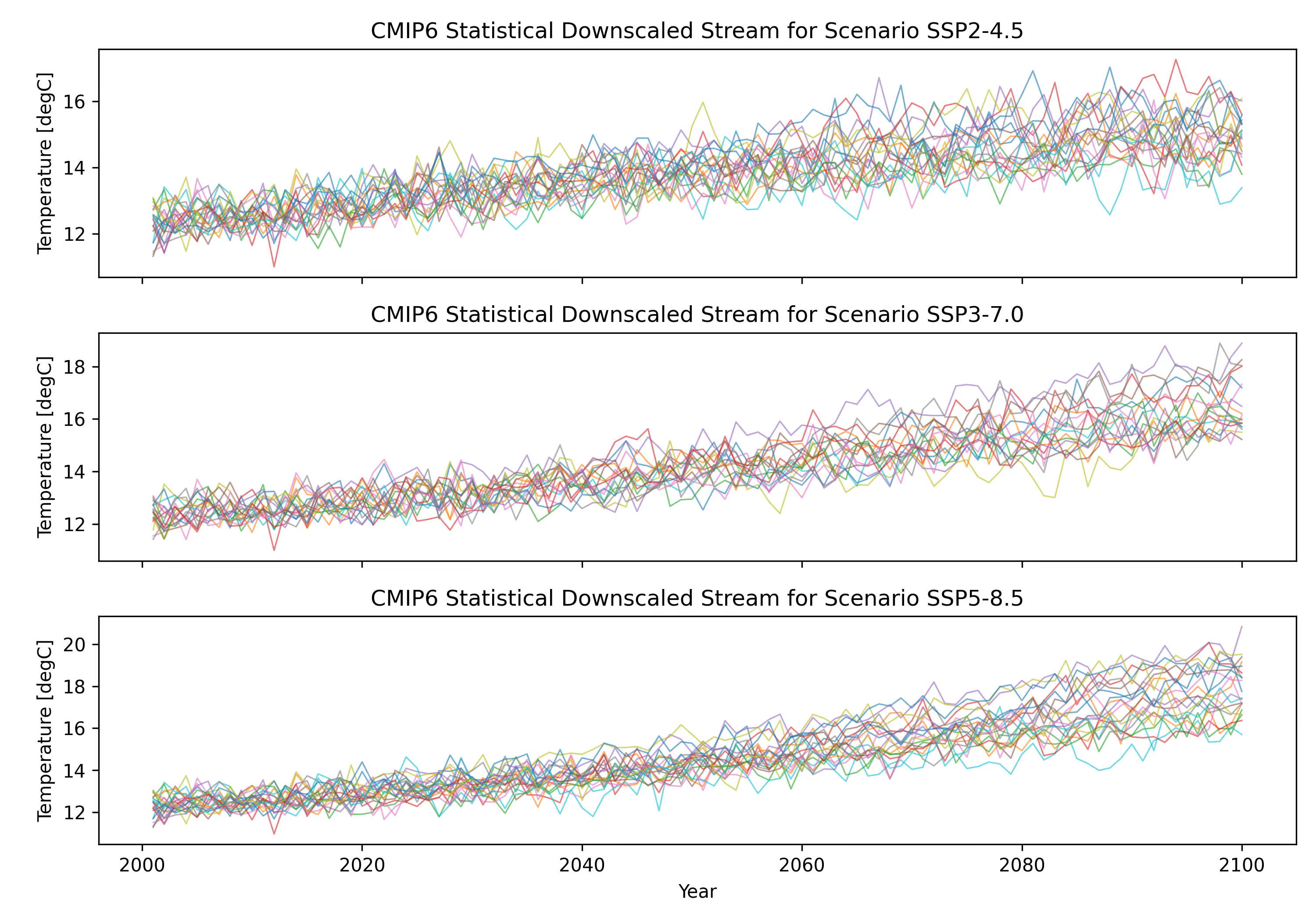
We found ourselves in different rooms altogether, talking about flooding in the South, how shifting wind speed trends affected renewable energy resource in the country, extreme heat and the chronic shifts behind all of it. Inevitably, several conversations circled back to the same point: Brazilian assets sit in one of the most exposed operating environments in the world, and none of that climate change exposure disappears just because a reporting obligation changed.
Climate Physical Risks under CVM 193
With the European CSRD setting the tone for what corporate sustainability disclosure could look like, and the ISSB publishing IFRS S1 and S2 in June 2023 as a global baseline, countries have continuously been establishing their own national takes on sustainability reporting requirements, aiming for alignment across the international frameworks. In Brazil's case the direct reference point was the ISSB. These approaches push towards a global consensus, so that sustainability-related financial activities can be assessed under different frameworks without diverging in scope, enabling easier cross-framework reporting for companies.
So came the first Brazilian sustainability reporting framework, Resolution CVM 193 of October 2023: the main rule that set out sustainability-related financial disclosure, inclusively addressing the disclosure of risks and opportunities related to climate change. Brazil was, in fact, the first country in the world to write the ISSB baseline into binding regulation - a detail that makes the more recent turn all the more noteworthy. The technical content sits in the standards issued by the Brazilian Sustainability Pronouncements Committee (CBPS), which mirror IFRS S1 and IFRS S2.
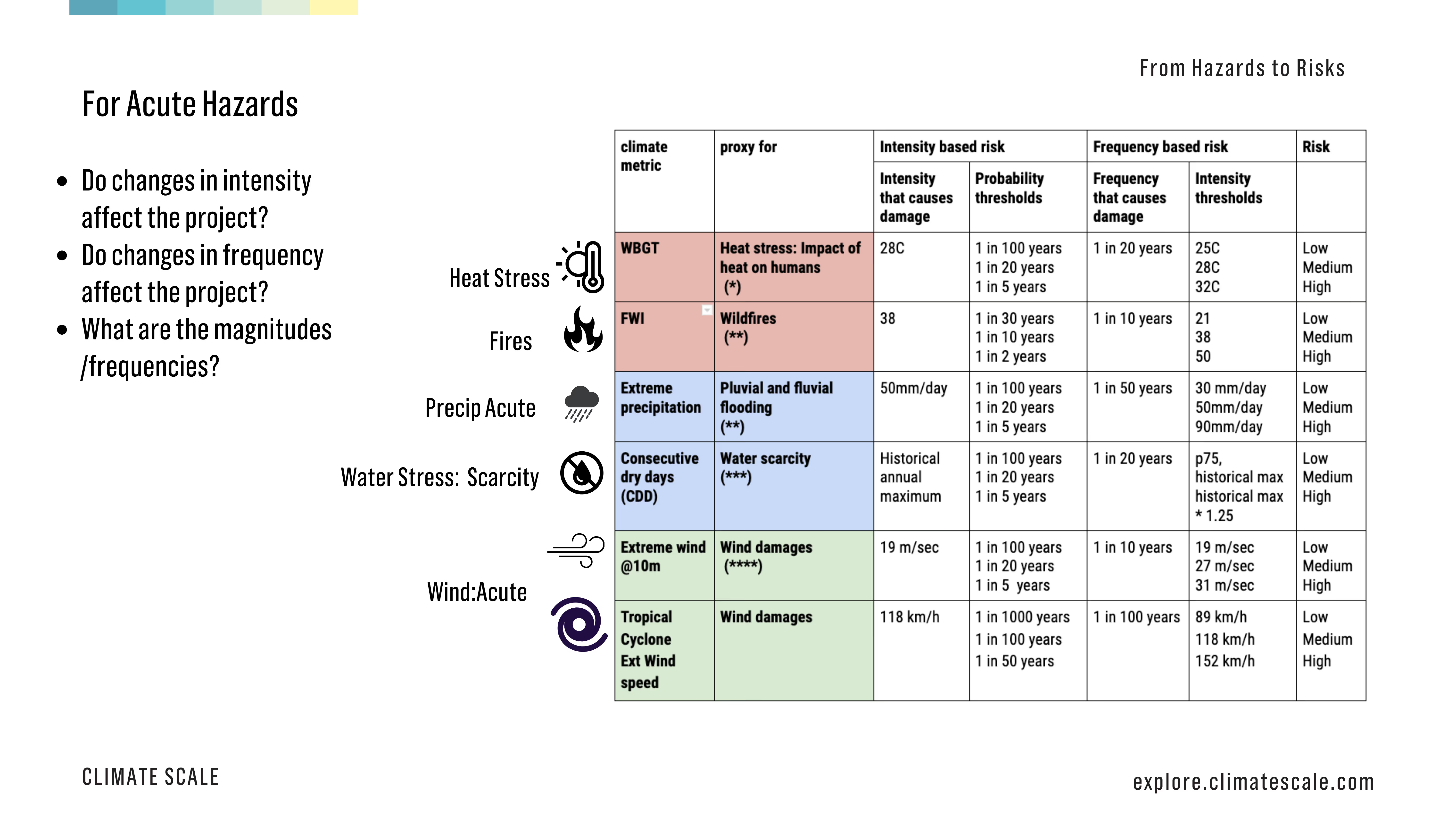
CVM 193 did not require a standalone physical risk assessment, but physical risk is far from absent from the framework: CBPS 02 names climate-related physical risks as a defined category and splits them into acute and chronic, requiring disclosure of both where they could reasonably be expected to affect the entity's prospects. In practice this meant assessing and reporting risks such as floods, extreme heat, storms and droughts, alongside the chronic shifts behind them, wherever they were material to the business.
Unlike the CSRD, there were no company size-based implementation waves. Since the Resolution CVM 193 inception we have observed how, over the voluntary window, companies across different sectors and sizes started gathering climate risk data, not only to fulfil an anticipated reporting duty, but furthermore to understand the importance of the risk (and opportunity) assessment for their business practices and proper financial risk disclosure.
The Shift to Comply-or-Explain
On 29 May 2026, and published in the Official Gazette on 1 June, Brazil's securities regulator (Comissão de Valores Mobiliários, CVM) announced a significant change to the country's sustainability reporting structure by amending Resolution CVM 193 through Resolution CVM 244. The mandatory phase that was due to apply to publicly held companies for financial years beginning on or after 1 January 2026 has been revoked. Reporting stays voluntary, and what replaces the mandate is the “comply-or-explain “ model.
Concretely, the resolution does three things:
- It removes the mandatory phase
Publicly held companies are no longer obliged to prepare and disclose a sustainability-related financial information report. The regulator framed this as a matter of flexibility, arguing that entities should be able to weigh the expected costs and benefits when deciding how to allocate investors' resources.
- It introduces an explanation duty from 2027
A listed company that chooses not to publish a report must say so through a formal market announcement, including management's reasons, no later than the date on which it files its annual financial statements. A company that has been reporting and decides to stop must announce that in the fiscal year before it stops.
- It keeps the technical architecture intact
Entities that do report must still make an explicit and unreserved statement of compliance with the CBPS and ISSB standards, commit to at least three consecutive years of reporting, submit to assurance, and meet consolidated filing deadlines (with the Annual Reference Form in the first year; within three months of year-end, or with the financial statements, whichever comes first, thereafter).
The distinction matters for our purposes: what disappeared is the legal compulsion, not the standard. A Brazilian company that discloses in 2027 is disclosing under the same climate-related requirements - including physical risk - as it would have been under the mandatory regime.
Redefining Opportunities for Climate Physical Risk Assessments
For companies operating in Brazil, and for us as a climate services provider, this changes the framing of the conversation rather than ending it.
Physical risk is a business question before it is a reporting question. Brazilian assets sit in one of the most exposed operating environments in the world. Companies that were assessing physical risk only to satisfy CVM 193 now have a genuine reason to ask what the assessment is actually for: capital allocation, insurance negotiations, business continuity, and the cost of debt.
Voluntary disclosure is a differentiator. Under a mandate, ISSB-aligned reporting would have become a baseline. Now, a well-evidenced, asset-level physical risk assessment is one of the clearer ways a company can distinguish itself in front of international investors - precisely because its peers are not obliged to produce one.
Regulatory uncertainty argues for readiness, not for waiting. With the Ministry of Finance signalling a possible revision, and with international frameworks continuing to converge, the companies best positioned are those that keep their data and methodology current to be able to report if the requirement returns, and able to benefit from the analysis in the meantime.
That is where we see our role, and it is what our conversations on the ground in Brazil confirmed: the demand is shifting from compliance support towards decision support. We are glad to have spent time there just as that shift became visible.
As sustainability reporting continues to evolve, one thing remains constant: understanding physical climate risk is becoming a strategic business capability, not simply a compliance exercise.
Share the word



.jpg)






.avif)