Energy assessments for diversified Wind Portfolios under a changing climate
Climate‑Aware Wind EYAs: How Advanced Climate Science Reduces Uncertainty in Large Wind Portfolios
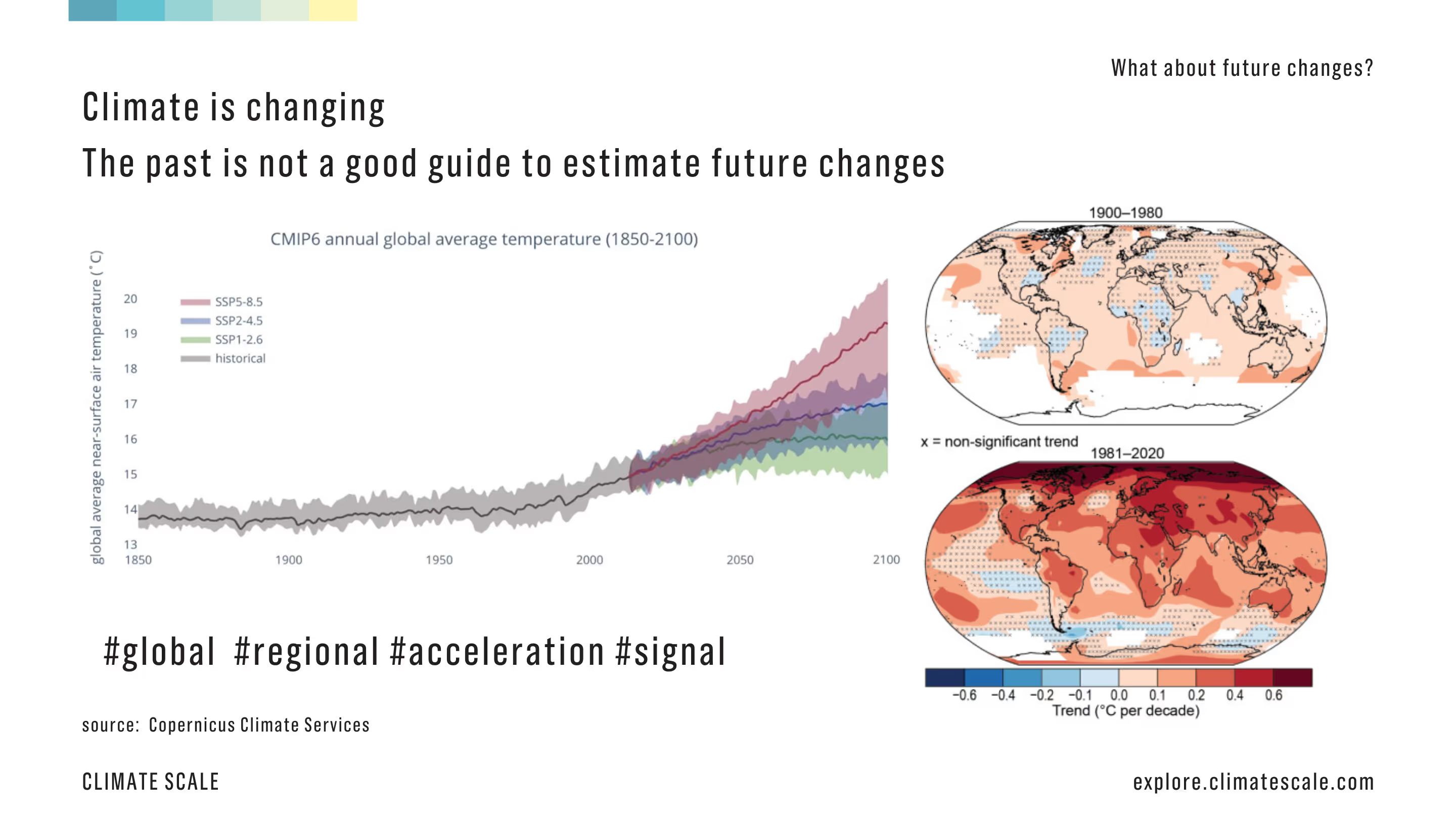
Wind developers now face a double challenge: building profitable projects while managing the climate risks that can erode long‑term production and asset value. Traditional wind energy yield assessments (EYAs) rely on 10–20 year historical baselines and often assume a stationary climate, which can underestimate uncertainty in both energy production and climate risk exposure.
For this particular use case, Climate Scale partnered with an international renewable energy developer to embed state‑of‑the‑art climate science into portfolio‑scale wind EYAs across several regions of their interest.
The challenge: are historical wind baselines still reliable?
The developer operates a large fleet of wind assets across multiple climate regions and needed to understand how robust their wind EYA really was. Key questions included:
- How do interannual, decadal and multidecadal cycles affect wind resources at site and regional scale?
- How do large‑scale climate drivers (such as El Niño, PDO, AMO, NAO, IOD, etc) modulate wind over their main markets?
- How should near‑term decadal climate forecasts and long‑term projections be integrated into EYA assumptions in a transparent, defensible way?
In short: are energy yield estimates based on the last 10–20 years of observational data representative of the next 40 years or over the project life time, or should this be revisited under a changing climate?
Climate Scale’s approach: climate‑aware wind EYAs
Climate Scale developed multiple layers of climate intelligence to build a climate‑aware EYA framework for the wind portfolio:
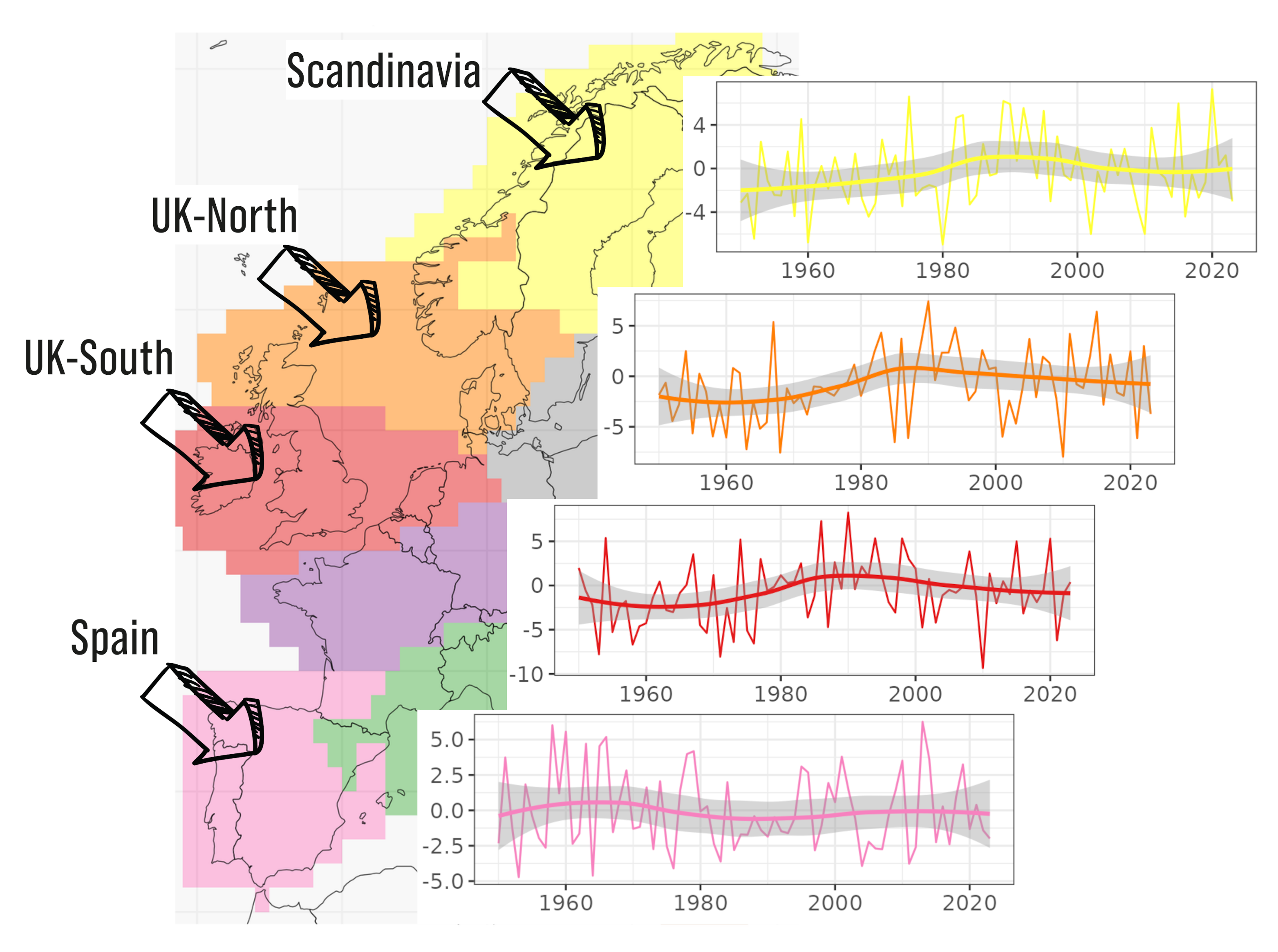
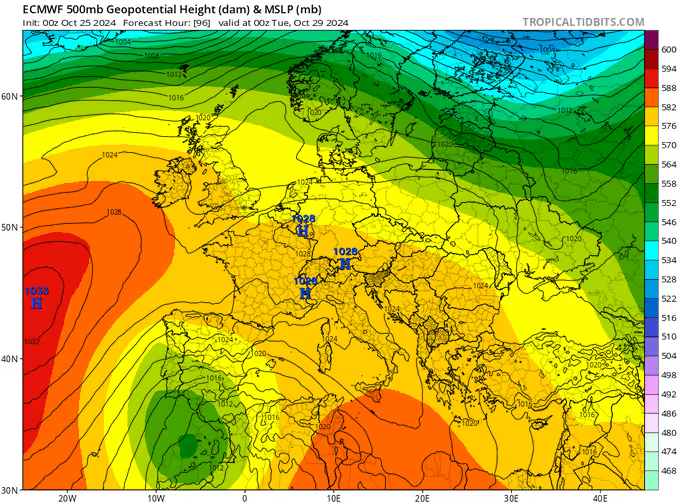
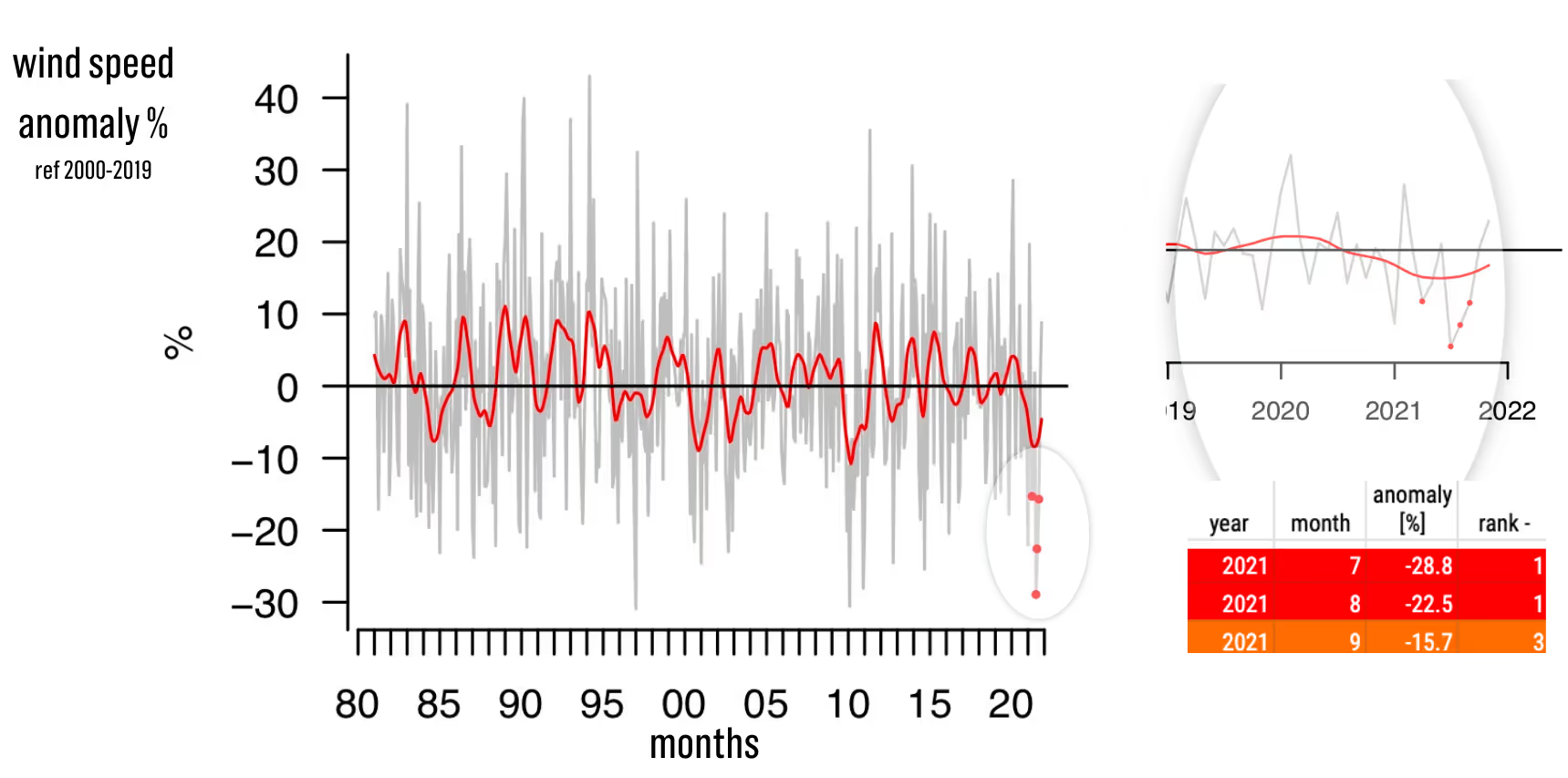
- Historical wind variability and drivers – Using reanalysis data, the team regionalised surface wind over a large continental domain into coherent “wind regions” and quantified how wind has evolved over recent decades, including long‑term tendencies and multi‑decadal cycles. They then analysed the influence of large‑scale climate drivers. Depending on the region, El Niño, North Atlantic and European patterns, etc, can play a relevant role. Through correlation and regression, it was identified where these teleconnections significantly affect wind variability.
- Decadal climate forecasts – Climate Scale evaluated state‑of‑the‑art decadal prediction systems with hindcasts and skill metrics to understand where forecasts of wind anomalies provide useful guidance.
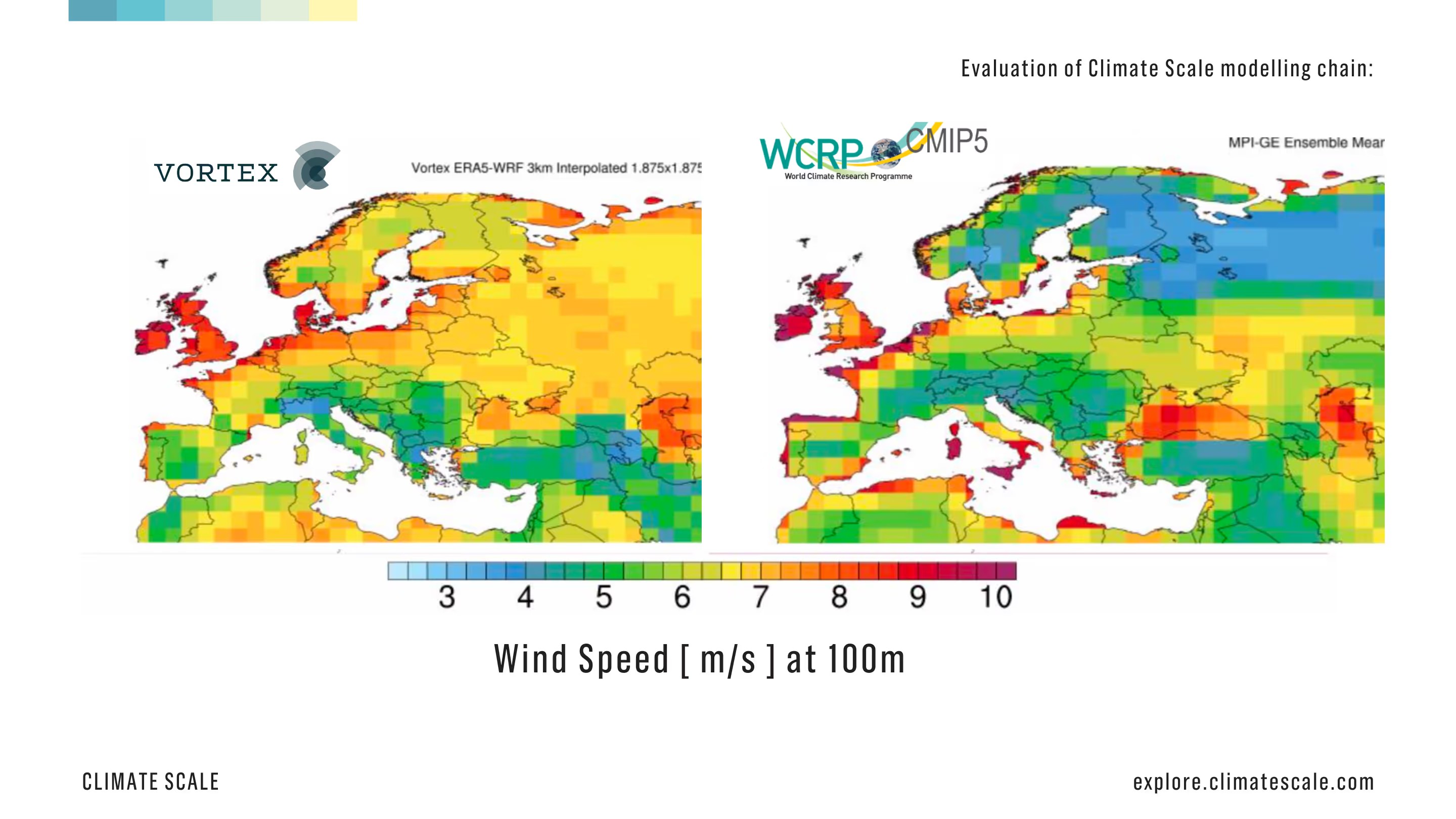
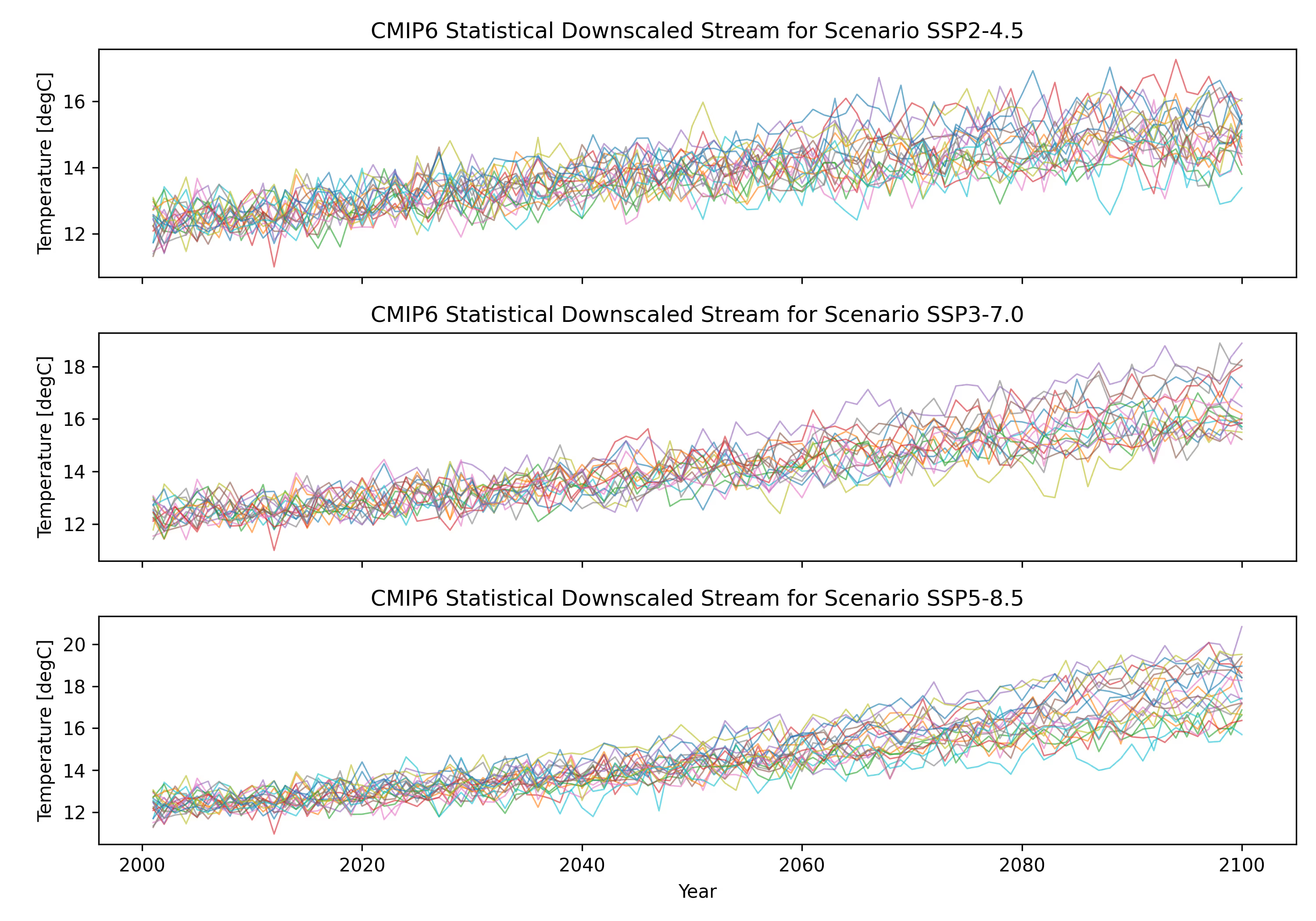
- Weighted climate projections for wind energy – The team analysed multi‑model ensembles from CMIP6 under different emissions scenarios and applied a model‑weighting approach to select the best performing models for each region of interest.This produced ensemble projections that reflect both model quality and diversity.
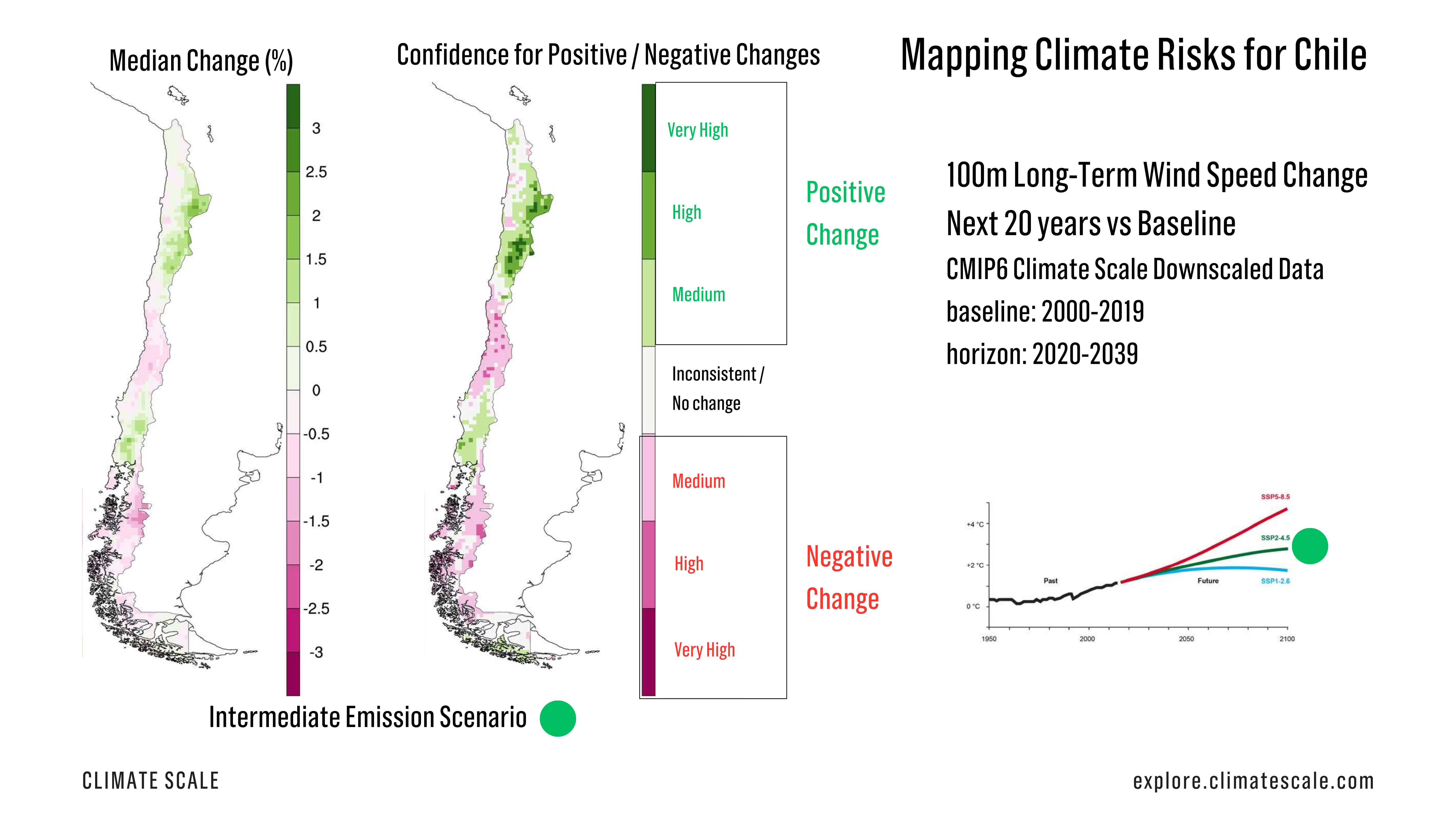
- High‑resolution climate projections for representative sites – For selected locations, Climate Scale downscaled global projections to higher‑resolution wind fields, providing local‑scale information that can be used to stress‑test EYAs and long‑term assumptions.
This end‑to‑end process connects global climate drivers, regional wind regimes and local site conditions into a single, coherent view of climate risk for wind portfolios.

Key insights for wind portfolios and EYAs
The analysis showed that wind resources across a large portfolio do not follow a single, uniform pattern over time; different regions exhibit distinct combinations of long‑term tendencies and year‑to‑year variability.
The work also highlighted that large‑scale climate drivers and internal variability can influence wind conditions on timescales that are highly relevant for project financing, but that the strength and nature of these influences differ by region. Some areas showed clearer potential benefits from incorporating near‑term climate information into planning, while others remained dominated by variability that needs to be treated statistically rather than deterministically.
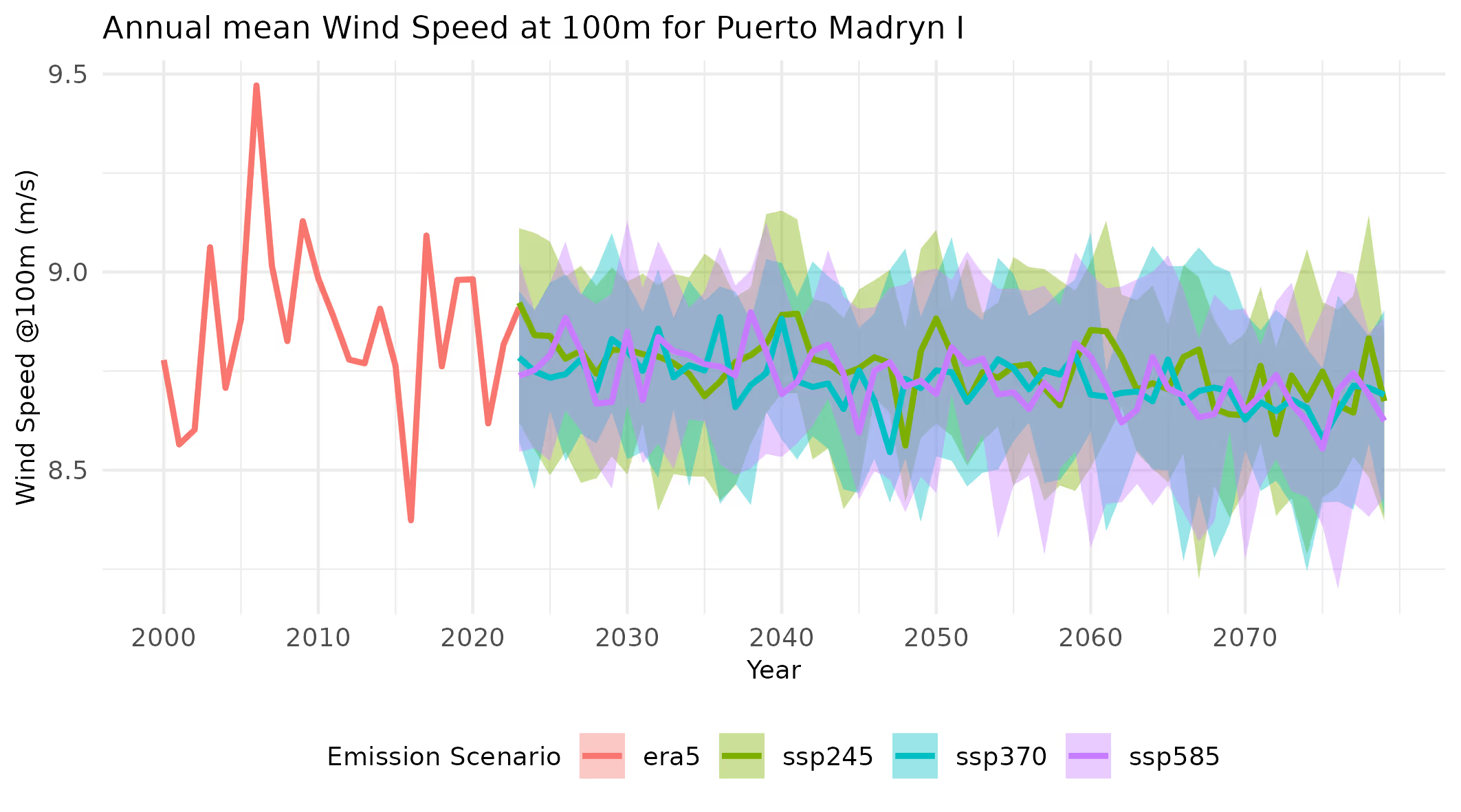
Multi‑model climate projections and model weighting provided a structured way to explore possible future changes in wind resources, while making explicit the uncertainties involved. At a selected set of locations, downscaled wind projections illustrated how changes in mean conditions and natural variability can interact over typical EYA time windows, reinforcing the need to treat climate change as an additional source of uncertainty.
Business value: from climate complexity to bankable EYAs
For the developer, Climate Scale’s climate‑aware EYA framework provided a robust scientific foundation to:
- Identify regions where climate information beyond the historical record can be used to better inform wind energy yield assessments and strategic decision making.
- Support conversations with investors and internal risk teams using transparent, IPCC‑consistent methods and traceable climate assumptions.
- Respect current market practice by keeping P50/P90 methodologies unchanged, while adding a dedicated, climate‑aware section to technical reports that explains how variability and climate change may affect long‑term performance.
By combining advanced climate modelling information, regionalisation techniques and high‑resolution wind projections, Climate Scale helps portfolio owners turn complex climate dynamics into concrete numbers they can use in wind energy yield assessments, climate risk management, portfolio diversification and long‑term investment decisions.
An example for regionalised wind resource assessment and improving the skill of 5-year forecasts can be found here:

Share the word



.jpg)








.avif)